WARNING!!
All content on this website is copyrighted. Do not use any content of this website without our written permission, to include photos.


Showing posts with label Homesteading. Show all posts

Monday, February 28, 2022

February - A short month and a short entry.


 The weather continues to be ridiculously dry.  A much anticipated snow storm passed to our South, robbing us of any snow.  The next week promised another snow storm, which passed to our South. Again, we stayed dry. The next storm was less promising, but still heading our way, but passed to our North. The last storm promised a track that would gift us with snow, ice, or rain, we had none of it.  Always the bridesmaid, never the bride, eh?

We did however get cold with that storm. Previously we had spent February in the mild 40s and 50s, and even a couple 60s during the day, and below freezing at night.  But the last storm brought arctic air with it and we spent a week of not even making it to the freezing mark during the day, all the while, the winds HOWLED. The windchills were brutal, sometimes down to -20F.


But the pendulum has swung the other way, and we're back in the 60s and low 70s for the end of February and beginning of March.


As always nice weather means working outside.  This month's project - a HOOP HOUSE for things earlier and later in the growing season.  It will also allow me to put plants too tall for the Greenhouse into the ground and get growing before the soil in the full garden is ready.

As always, after the first swing of the hammer, I wonder what on earth possessed me to start another project. But once it's started, it has to be finished.  I ripped out the lower production end of the garden, taking out cattle panels and pulling up the irrigation lines and putting them aside.  The T-posts that went 2 feet into the ground, which was still quite cold, were another challenge. I found a T-post lever at the tractor store, which helped greatly with that end of the project.

I plotted out the location of the main supports and got to work pounding in new T-posts.  The plan was to use electrical conduit arches with painted PVC post slides and angles. The problems were many and frequent and frustrating, requiring trips into town for replacements.  My PVC didn't fit over all my T-posts, which caused me to replace some.  I got a batch of a poorly molded PVC reducers, some were from one box, they were fine;the ones from another case, were not. The PVC glue and primer I had on hand was not working between the 45' PVC and the electrical conduit (PVC), but it should have, so a new set was purchased. Conduit that had failed at the fittings and needed new ones, had to be outright replaced. 


 I finally got all the arched made and up.  Now for the connecting pole that runs down the ridge to keep the spacing between all the ribs.  I followed the directions and pre-drilled the holes for the bolt that would connect the ridge pole to to the arch.  Arch one went fine. Arch two, in the middle of drilling, SNAP. right in two.  Arch three, SNAP. Arch four, SNAP.  That was NOT supposed to happen.

Annoyed beyond belief, I ripped all the arches off the posts and tossed them over the garden wall.  Obviously I was going to have to manage a complete redesign, which of course, would require yet ANOTHER trip to the hardware store. Which, if you haven't been recently, is a voyage to Sticker Shock Land.

Luckily the next few days were cold enough to be forced to stay inside and come up with a new plan and a shopping list. I came across a plan using cattle panels and various frame setups. The whole thing was kind of a build to suit, wing-it as you go, situation.  It's been an adventure that's for sure.  Sixteen foot cattle panels are an adventure to haul and even more to carry and install alone.  Trips to Habitat are always hit or miss.  Lumber quality at the moment is HORRIBLE. Material shortages mean getting creative as you're standing in the isles at Home Depot, a now defunct hoop house plan on a napkin, fluttering to the floor.


I still have some work to complete this week before the weather swings the other way.  I should be able to mange at least painting the lumber before the rain/snow/cold arrives.  The plastic requires a windless day to put up, and I'm not sure when that's going to happen.


So there's the outdoor project.


For the cold, chilly, frigid days I turned to the looms, and briefly the sewing machine.


A quick, necessary project was to complete some new, re-usable shopping bags from old T-shirts.  These are a crazy quick project.  The shirts are heavier quality shirts, in children's large, and adult small and medium, that I picked up at the local charity shop for a dime each.  I washed and sanitized them, as well as sun drying, and now I have two dozen new beefy bags.

Fergus and I managed 14 rugs before the warp run came to an end.  Those were all measured and labeled, rolled and tied, and displayed in a wicker market basket.  Four have already sold at a local B&B/Antique Store.

Fergus is now loaded with a blue and white striped warp, which when woven with white or cream rag, will give the illusion of a striped ticking type of rug.


I then turned my attention to the long ignored Nessie, my four harness Tweed and Tartan loom.  Her warp was measured and cut in 2020 right before attention was turned to emergency sewing.  Her warp was finally wrapped in Spring of 2021, when I got busy with just about everything else. Now that she was in her new home, the very fact that the light was amazing, and it was in the heart of the house, I was ready to jump at the chance and finally finishing her thread-up.

She is now fully loaded, and I am almost done with the DunRovin Station Tartan, which will be turned into a dress sash for me, and then the sample for the Scotland Registry.  I have 6 more tartans lined up behind this one already.


So here's to the short month, as we look forward to March-more weaving, and the opening of the Seeding Shed.


Monday, January 31, 2022

January, The Quietest Month of the Year (NOT)


The month of January, the darkest, coldest, snowiest month of the year.  It's a month were snuggling up on the sofa with a soft blanket, a pair of woolly socks, a warm drink, and a good book is expected, nay, required.  By the end of January, a firm and familiar bond has been formed with your snow shovel. Each time you use it you wonder if this will be it's last season, or if you should treat yourself to a new one at the hardware store. After all, they're on clearance now next to the flower seeds.  Your woolen mittens are stiff and now perfectly formed and felted to the shape of your hand. You've completely given up on not having hat hair, and your chore coat, and your very pores perpetually smell of ode to diesel from tractor exhaust. You've developed milk maid's shoulders from hauling warm water to the livestock, and have mastered the art of 'going to your happy place' while preforming them 3 times a day, while being serenaded by the howling, biting winds.

But not this year, not this year.

We have been utterly blessed with fantastic weather this year. We are drastically low on precipitation, which is going to be a problem come Spring if we don't make it up soon. But the temperatures have been very, very nice.  We've been frigid, but then we bounce up into the 50s.  We drop again to have one or two days that never break freezing, but then we pop back into the 40s, or even 60s for a couple of days.  It's made it impossible to fall into the annual Winter funk.  How can you possibly waste a sunny 55 degree day INSIDE?  You can't.  You spend the little cold days inside planning and plotting projects for the nice days.  On the nice days, you work yourself silly before the cold sets in again.

The first couple of days of January were ridiculously cold. Our high temperatures were 9'F(-13'C) and 16'F(-9'C), respectively. Add the wind to that and it was a classic inside pair of days.  I used to to work in the sewing room.  A lot of odds and ends in the repair basket were tackled, but most importantly, I finished the Sewing double!  I have put this off for months.  The original pique knit, which was recommended, was far too stretchy. As you stuffed it, it overstuffed to beyond your measurements and was still too soft for its intended purpose.  To counter that, I changed to a heavy duty cotton duck and added a little to the seam allowances to make up for the total lack of stretch. Once that was complete, I glued heavy cardboard disks to the neck and arms ends to give it structure, slipped it over the base and stuffed it as tightly as I could while still matching the form and measurements.  It came out spot on!  Then I adjusted it to the correct standing height. It is now ready to help drape bodices, and hem skirts.  I'm glad I tackled this project, but I'm VERY glad it's DONE.

I knew I then had two days in the upper 40s and mid 50s.  Laundry was hung outside on the line, one day of clothing and the second 100 ft of sheets to be stripped for rugs on Fergus. It was during one of these hanging sessions that I got a bee in my bonnet.  Fergus was currently, temporarily, inhabiting the space under the window in the upstairs (main floor/ground floor) library due to the weather when we moved him from the garage and into the house, and due to his hulking size and considerable weight. Where on earth was I going to put him on the lower level where his sister, Nessie was residing.  I wasn't happy with her location to start with, I couldn't shove Fergus down there too and be happy. So now where am I going to put the two of them where I would be happy?

There was room on the lower level, large windows, but it always feels apart from the house to me and oppressive, even with the brightest daylight lamps blazing.  I live and work on the main floor. But where to put them both where they could both be used AND out of the way?  As I stood and worked on a rug on Fergus, it came to me.  I would relocate the library and make the library the weaving studio, or as Doc calls it, The Loomy Bin. 

I dropped what I was doing on Fergus, and grabbed my tape measure and ran it across the top of one of the bookcases, and then down the stairs I went to measure the wall behind Nessie and under the windows.  THEY'D FIT!  Then I measured Nessie and went back upstairs to measure under the window. Nessie was lower and would go under the window, while Fergus would go into a corner.  SHE WOULD FIT TOO!


I put the rug supplies to the side and immediately started taking things off the walls and carrying them downstairs. The walls would need painting.  I was shocked at how faded the paint was after only 7 years and protected by UV windows. I cleaned and moved stack after stack of books, then slid the heavy wood shelves to the basement and set the whole library up downstairs.  There were only hours before a cold front was coming through and there was no way I could move Nessie alone, she was far too heavy and bulky.  I folded her up, and made her as skinny as possible and I built an extension for a dolly to hold her.  Doc helped me load her up and get her to the trailer where we drove her up and around the house to the main level, then wheeled her to the front door where she had to be lifted up the stairs and into the house. She was officially in the Loomy Bin.  

It could get cold and miserable now. And it did.

I actually had a spare gallon of paint I loved from another project and spent a whole day painting the studio. The second day I put the room back together and decorated.  Yes, it was that fast.  It's set up exactly right. It's comfortable. It's soothing. It's functional, and lets me be accessible to the whole level of the house I use. And all of my weaving items are in the same room, not spread all over the house, hither and yon. I can close the door and turn up my podcasts or youtube videos and the dog can still see me (glass door), but I don't disturb the rest of the house with 'slide, klunk, swish, klunk'.

I can now keep an eye on dinner (or cookies) and work on a few rows.  I can work and the dog doesn't feel abandoned.  It's lovely. (There are still a couple of empty spots on the walls for certificates still in the mail. I am making a rail to hold my shuttles within reach, and an adjustable work lamp would be a great idea.)


As long as I had the roller, pan, and ladder out, I decided I may as well paint the dinged wall in the kitchen, which turned out to also be horribly faded despite having NO direct sunlight on it EVER.  Sad testimony for this brand of paint. (Suzie helped me paint the kitchen. Yes, my brilliant beagle turned headfirst into a wall.)

The weather warmed again and I put into motion the next outdoor project, as long as the laundry was flapping away on the line again.  I wanted a hoop house for the garden.  I had it slated for later in the Spring, but why waste those warm days, eh?  This would be a place to keep plants earlier and later in the growing season, once they out grew the proper greenhouse.  Irrigation lines needed pulled and cattle panels and T-posts needed removed to make room for the new structure.  I knew what I wanted, but only a little about HOW I wanted to do it.  There were some bumps in the road over a two week span, including some snow, some misfitting pipes, a dead can of paint, poorly manufactured parts, PVC cement failure and not being able to find the right size T-posts. But so far I have a bare frame.  She won't be DONE in January, but she's on her way.


Of course some things had to give way for the hoop house.  The up-cycled bean arch I just put up this fall felt in the way, so down it came.  And with those two rows gone, I could expand the blackberry row another 20 feet, deal.  As long as I was building longer rows in that direction I could add 10 feet to the hyperactive grape vine row, deal.  Oh, and as long as I was out there, the horseradish was not only too close to the hoop house now, but would also be too shaded.  It needed moved.  

Have you ever had to move a 5 year old mother horseradish plant? She was HUGE, 24 inches across and I dug down another 15 inches before I started cutting off the rhizomes, which were almost 2 inches across in some instances.  I broke off some larger ones and tossed them aside and moved mother to a new spot, then dug up two of her daughters and put them in the same row.  I know full well that each broken rhizome left in the ground is a potential new plant this spring. I will be overwhelmed with the spicy condiment, but it is welcome.
I brought in the pungent stick 2 inches across and 20 inches long.  I diced it into manageable pieces, and slipped them into a quart jar along with 1/4t of salt, 6 T water, and 3T of white vinegar and then carried it and my immersion blender to the front porch.  This is NOT a job for INSIDE the house. Holding the jar away from my face and pointed away from me I let the stick blender do its job.  I shook off the blender and capped the jar for 15 minutes before transferring it to a pint jar.  Not a bad haul.  Nothing like a fresh batch of the good stuff for February.


I installed a set of shelves in the sewing room to hold materials for the rug loom, since that's where they'll be cut .  I just took the first warp winding worth of rugs of Fergus.  I actually ran out of room on the take-up beam before I ran out of warm. I manage 12 rugs, with probably two left on the loom. When this warp runs out I'll order new heddles for Fergus, install them, and thread him up again.  It's nice to have a project that doesn't require a great deal of brain power for break times.  (Unlike the projects on Nessie, which require so much attention, the radio can't even be on.)


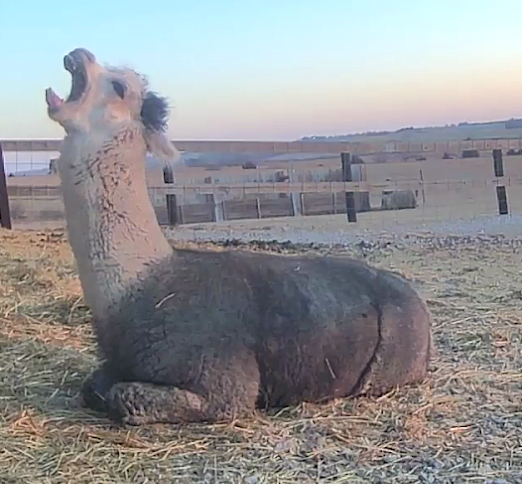
The hens and alpaca are happy and very much enjoying the warmer winter. Days are spent lounging in the warm sunshine and searching the poo piles for bugs and wayward seeds in the straw and dropped hay.


In closing, the only thing special that came out of the kitchen during this month long work-a-thon was a triple twisted cinnamon flake roll from scratch, 100% whole wheat.  I think it made up for the couple of night's that dinner was soup and cold sandwiches.


Friday, December 24, 2021

My 'New' Union 36 Loom - Get your coffee. It's a long one.

 It came to be on a sweltering early June day.  The kind of day where the sun sits high in the sky, wavy lines of heat rise from the asphalt road. The cicadas slowly come to life, working hard to muster the energy in the heavy air to bolt out a few clicks to a potential mate before settling back down under a shady leaf. And the laundry on the line, hangs lazily, barely making an effort to dance in the breeze that refuses to lead. 

It was just this day, that I found myself in the truck, about to make the same weekly trip to the feed store, the market, and the hardware store.  The same truck, the same road, the same destination, a mind numbing routine.  The weather making me indifferent to the whole prospect. As the truck hummed along I spied a small white sign on the corner of the gravel road, poking out of the already tall prairie grass. A siren's song on poster board with a red arrow and the simple words 'Barn Sale'.


Roused from my repetitive dusty trail, I turned the truck down the gravel road less traveled, a rooster tail of dust lazily rising behind me. I tried to temper my excitement, knowing that it could either be a marvelous adventure filled with treasure, or a bust, a barn filled with rusty junk that should have been sent to the dump decades ago. Farmers and ranchers rarely throw things away. You never know when you'll need that thing-a-ma-jig again, and why buy new later when you can simply save what you already have? Any you know what they say, 'one man's rubbish, is another man's treasure.'  There was no harm in looking, and the road was in the general direction of errand anyway.  If nothing else, it was a diversion and a chance to meet someone new, see a homestead close-up instead of from afar as you fly past.

Each passing crossroad brought be closer to the city, but another red arrow pointed me onward. My excitement peaked when I reached where X marked the spot.  A lovely homestead I have always admired from afar as I would cut across country for a change of scenery.  A ranch style home near the road, encircled by a protective copse of evergreen trees, strong, tall, sentinels guarding against the winter winds on the open prairie, off duty in the summer heat. A small wood clad outbuilding stands just off the driveway loaded with potted plants and the rusty detritus of farm life and discarded implements that have become yard ornaments.  The main attraction was a large red gambrel barn, trimmed in white. I turned into the sale hoping for the best, but already happy that I was going to see this gem close up and not at 55 mph.

The sale was a driveway full of typical odds and ends and didn't go near the barn or sheds. On the property was a never before noticed large greenhouse, and its bounty was spread on large pieces of plywood on sawhorses, makeshift tables displaying hundreds of tomato plants seeking a new home, sleepy in the heat. The owners were kind, and seeing nothing I wanted, but not wanting to just show up and leave immediately, I wandered into the large three car garage.  This was filled with bits and bobs, dusty boxes,  outgrown children's toys and clothing. As I turned to make a final pass, my eyes quickly scanned a dark corner, piled high with baskets and rubbermaid containers, all partially covered with old blankets, and yet still part of the sale. Recognizing a familiar shape peeking out, I peeled back the blanket to an old Union 36. I could almost hear her weeping for joy for having been found, maybe I would rescue her? I looked her over quickly as my heart beat like a hummingbird. The more I looked, the
more my excitement was tempered.

Missing pieces replaced
with bailing wire and 
electrical tape.

Years of sitting in the garage, dust and mice visiting, wild swings of temperature and humidity taking its toll.  Every piece of metal was rusted. The beam was loaded with rotting and filthy warp. A started and abandoned rug lay crumpled on the breast beam. The once glistening maple, the pride of some 1930s housewife, now sat dull and lifeless, a shadow of its former glory. I looked at the price, inquired to the owner, and made a difficult decision. She would not be coming home.  I had a loom.  A beautiful cherry Norwood loom was at that very moment sitting in the studio waiting for me to finishing slaying a new tartan warp.  As I turned to walk towards the truck, I swear I heard a faint weeping, the loom resigned to it's lonely fate.


Rusty, covered in
droppings and grease
pencil notes.

I'd be lying if I said I didn't give it a second thought that day, that week, or even that month.  Could I save her?  Would she even be there? I could do it. I refurbished antique sewing machines a long while ago, and a loom wasn't even that complicated.  Nah, I had a loom already. Besides, where would I put it. Back and forth I would silently debate with myself. Slowly the thoughts faded completely.

At the beginning of December, I found myself at the first meeting of a newly formed fiber artists group. As I sat there in the shop, which was our meeting place, surrounded by restored looms, and spinning wheels, the old loom crept into my thoughts again. Like the Tell Tale Heart, it would not let me go.  On the long drive home I decided to go the long way and stop by the farm and see if the loom was still there? The early winter sun, kissed the horizon as I turned unannounced into the driveway.  I knocked at the door, but no one answered.  Dismayed I turned toward the truck and was greeted by someone coming out of the shed. I asked if she had managed to sell the loom at sale, and if she hadn't did she still have it. She did!

She opened the garage door, and I swear I hear the little loom squeal with glee, 'you came back!"

We settled on a price, and I told her I would be back in the morning with the trailer and the check. The woman told me the story of how she bought it when they purchased the house 20 years ago, with good intentions of using it, but she never learned to use it, or even tackled cleaning it up or off in 20 years. The fabric was ancient, at least the mid 70s judging by the colors, so 45 years of sitting collection dust in one location or another.

I carefully wrapped her in a tarp for the drive home.  If anything broke off, or rattled off on the way home, I wanted it to be contained for retrieval. When I got home, Doc helped me offload the loom into the main garage on the house. The thought being that it would be going in the house eventually, and being winter I wanted to avoid having to carry it all the way up the hill in a blizzard.  I'd rather haul tools from the shop up to the garage to work.  As we sat it on the floor, I looked at it and silently said to myself"what have I gotten myself into"?

But not only was I determined to tackle this project, I was determined to do it right, do it quickly, and do it on a budget. I would be thrilled with a week, but 10 days seemed more realistic.  There was so much to do.  All the metal needed either replaced or the rust dealt with.  All the wood needed sanded down, fed, and then resealed.  Missing pieces needed replaced. It all seemed like so much. How do you eat an elephant? One bite at a time.

I took photos like mad, after all, pixels are free.  I looked at other looms online to see what I was missing.

I started taking it apart and carefully placed each item on paper I had taped to the floor.  I labeled everything knowing I would forget what went where, but hoping I wouldn't.


The first task was taking off over 400 rotting warp threads  and the old partial rug covered in dust, mouse droppings, dead bugs, and dead spiders.  I went through the box after box of stripped fabrics, nothing newer than the mid-70s, some I actually recognized (remember yellow sheets with orange mums, daisies and mushrooms and butterflies on them?)These covered in mouse droppings and dust. (In retrospect, I should have masked and gloved for this, but hindsight, eh?) One box, better sealed than the rest contained musty books from the 70s, and 11 rug shuttles, and one boat shuttle and the two slaying tools. This was a treasure trove.

I sanded metal. I sanded wood. I visited the hardware store more times than I care to admit. Tiny achievements brought so much pleasure that I couldn't sleep for planning the next day.

I wanted to clean it up and fix it, but not to the point of erasing its past.

I left some of the decals that someone in the 60s proudly put on. I left the gnaw marks of a barn rat, and the scratches on one leg of a barn cat. The handmade replacement crank handle for the sectional beam, so lovingly crafted, was just as carefully repaired and re-installed. 

The sanded maple wood was cleaned and stained a rich, warm chestnut.

The metal was sealed with a rust neutralizing black.

Missing pegs were re-crafted with the help of a 1940s steel pencil sharpener I have.

The rusted heddles were the last on my list.  Their condition and sheer number made the project daunting.  Do I simply purchase new and break my budget? Or do I soldier on and try to save them?  I decided to try to save them. If I failed, then I would purchase new.  I already saved the heddle bars with sanding and a light oiling. Now what to to with the heddles.  I tackle my rusty cast iron before seasoning with vinegar, why not try it?  50 heddles at a time, my patience limit at the sink, went into a vinegar soak while I tackled other chores. I then rinsed and wiped the rust off each and every one, and set them out to dry. When I was finally done with them, I lightly sprayed the lot with a mist of oil, and again wiped each one down, leaving only enough to slow the rust.  Although it would now be stored in a controlled environment, so I hoped the iron would be kept at bay for a long while.


I carefully reassembled the whole thing. At a critical juncture, just before I replaced the castle, the tallest piece, I decided to move it into the house.  I decided on the library, by the window, where I would have plenty of daylight and could watch the world go by. I wrestled it onto a padded dolly, wheeled it out of the garage and down the sidewalk. I padded all the front steps and porch with garden blankets and slowly worked it towards the door.  Even as wide as this modern door is, the loom still need to be on end, and then one side through the frame and then the whole thing rotated around and the other side to follow around.  Once it was in the house, furniture sliders ruled the roost, and the process was repeated to get through the library door.

Once it was settled in, I began to reassemble in full. It was really nice to work in the warmth of the house with the radio for company.

I measured it for a new beam apron.  Before she only had one bent piece of iron to draw up the warp. I stuck to my budget, and my refusal to drive into the city again, and raided my fabric studio for some cotton duck cloth.  I opted for brass grommets for the warp ends to pass through, and left pockets for new, heavier steel rods (from the tractor store).

I added a beater brake to hold the beater for slaying.

I added a hook to hold tools.

I installed new pegs and risers.


The last challenge? Re-threading the heddles. They needed sorted, counted, divided in two groups for the two braces. They needed turned the same and correct direction and slid back onto the rails and then mounted back into their frames and the frames hung and balanced.  I dreaded it, but it needed done.

The very last thing I did was add a plaque, my name and Refubrished in 2021.


Everyone, I'd like you to meet Fergus.


The Union 36 Loom was the premier rug loom of the time and was marketed to homeowners who wanted to make a little money on the side, or as a full time business.  It even explained in the manual how to acquire rags, and how to set prices based on competition in the area and materials costs.  They were manufactured from 1920-1940 and originally sold for $60 delivered. They came fully assembled and ready to use with a short amount of warp on the beam to help you get started. Now they can be found here and there, usually in poor condition and missing pieces, or heavily painted and in poor condition for around $200-450$ depending on condition.  New, modern models (different company) start at over $1000, and the wood isn't a hardwood and is always done in natural light tones.


Side story. A chance trip to the local thrift shop graced me with a bent wood seat for piano. It adjusts height wise by twirling the seat one way or the other on a large iron screw.  I refinished this at the same time a flat dark brown and repadded and covered the seat in a plaid wool scrap. Cost $20

Loom $150

Parts/supplies $58 (budget was $50), but I have bolts to return that will get me $15 back.

Odds and ends $60

Stool $20

Total - $273.00 and 42 hours (including clean up and putting tools away, but not shopping and drive time)


Monday, November 1, 2021

Is Anyone Still Out There? October 2021

 Hmmmm?


I've noticed that the number of readers across the blog-o-sphere, across everyone's blogs, have been dropping over the past several months, 18 months to be in the approximate neighborhood.  It seems that something increased the number of views of the Tube of You and numbers there shot up with the influx of stay-at-home-ers, the kids on tablets, and generally bored human beings. I guess it was simply easier and more entertaining to sit and watch than it was to sit in read.  The explosion of video makers covered everything from trends, opinion pieces, animations, the useless, and the ridiculous videos of watching people watch and react to other videos. But I'm still here. We're still here.  

I like to write too much. I like to read too much, even though my eyesight is jumping the shark.  A nice pair of prescription reading glasses takes care of that.  Now I just need to find the time to sit and write, to paint a mental image of the world around our little hill,  So welcome to my MeTube.

October was positively brilliant. It was a true Fall month. It was never soul crushingly hot, nor frigid.  In fact, here we are, November 1st, and we still haven't hit 32 degrees.  Rains came infrequently, but when they did, they came in bucket loads, inches at a time.  The lawns and hay fields are still emerald green and growing. The trees did their majestic fashion show over weeks instead of days, culminating just two days ago when all the aged dull yellow leaves, fell and blew off in a 3 inch rainstorm. Now even the fiery crimsons and oranges have dulled to rusts and burnt sienna.  


The extra days of warmth for the entire month allowed me to stretch out all my normal winterizing chores over 30 days instead of the normal 15.  I don't know if that's a good thing, or a bad thing. On the one hand, it makes Winter seem 2 weeks shorter. Or is Mr Freeze going to seek revenge for having a late Fall?

Doc has been adding 8 gallons of alpaca manure around each of the orchard trees. This not only fertilizes the trees with nitrogen safe fertilizer and smothers the weeds, which have been getting out of control around the trees.

A downy feather from a molting hen. A sure sign
it's about to get COLD. 
I planted 150 daffodil bulbs in the right-of-way ditch we are responsible for maintaining.  I had great and quick plans for that, until I took a good look at the ditch.  It's been three years since we mowed it to the ground and let it go wild, and I planted 300 native plants at each end. I needed those to get established before I could trim them down. Well, standing there, shovel in hand, I decided this was the year it needed a haircut.  The grass didn't look high from a distance, but up close, it was over 18 inches high.  I topped off the giant mower and got to it.  It's steep, and it's creepy. To safely mow it you can only go downhill, then pop up the roadside (less steep) side of the ditch, drive the length of the ditch to where it's level, drive along the top ridge and down you go again, rinse and repeat. It should have been a quick before I break for lunch job. Hahahaaaa, you've been a reader long enough to know that's not how this works. 
The ditch needed triple cut it was so thick. Then there was the bit that is so steep that I bottomed out the engine. The front tires were on the upside hill, the engine was wedged on the downside hill, and the back drive tires were mid-air.  Adding boards for traction didn't work. So Doc acted as spotter as I hooked up the tractor and dragged the mower out of the ditch and up onto the road. Two hours after toting my bulbs to the ditch, I was finally able to plant.

A quick plunge of the transplant spade opened a crescent, an added twist opened up a hole that I simply tossed a bulb into. I then removed the spade and stomped on the cut - times 150. It really didn't take too long, and daffodils look so great as the ditches green up in the Spring. They also spread so well on their own.  They're supposed to be deer proof. We'll see. Our deer don't seem to be able to read packaging.

The old 1960s, wooden screen frames I zipped tied together and used as a giant, long baby (chicken) gate across the workshop high bay door, finally started falling apart. The wood was fine, a testament to the craftsman of yore. It was the metal screening that was finally falling out.  Oh, but I had plans to use these elsewhere on the ranch.  I first replaced them with short metal panels that had a previous life as walls to our first chicken run 8 years ago. 
Of course the most insane of our birds fly up and over the panels, but it keeps the whole flock from playing follow-the-leader into the shop for a pooping party. But what about those 4 foot long wood frames?  Off to the garden with them! I zip tied them to the top of the cattle panel rows that hold beans. Hinged at the top, they look like a white frame roof from the road. In the Spring, I'll add some wire for the beans to climb on.

A hole rotted clean through the roof from one
bad shingle.
On to the big project of the month, the chicken run roof. This was something I could easily do myself. I simply needed a nice day or two to work. October obliged. Of course there was wind to take into consideration, but that's always an issue here. I didn't expect my steel until the very end of October, three or four weeks is what the website estimated when I ordered it. Nope, 5 days. Well ok then! A quick trip to town with the trailer, and I was home in two hours and ripping off the old, rotting asphalt shingles. This was one of those projects that once started, only had two stopping points-midway and DONE.

I dragged our giant trash bin down to the coop and started, carefully removing the old shingles. They were rotten and being held down with roofing tacks. They came up easily, but the trick was not to fling tacks into the lawn. Once they were off, I pounded any remaining tacks down and assessed the hole in the roof from water damage. Luckily, the damage section came off easily and I had replacement lumber in the shop.  The repair made, I was able to take a break for the day. While the run had no official roof, it was closed to predators for the night.


Day 2 was dedicated to putting on the full steel roof. It went on slowly, but easy and when it was done looked fantastic! Over the top for a hen house? Yup. But it's sturdy, and long lasting, and I won't have to chase pieces of it across the lawn anymore. Plus it makes a nice sound in the rain, which no longer comes through a hole in the roof.

That was the BIG project, but October is full of winterizing chores. A whole bunch of little things that eat up hours, which turn into days, that turn into weeks, and POOF the month is gone. Patio furniture needs cleaned and stacked. Garden tools need cleaned and put away, snow shovels dug out. The alpacas need their nails trimmed. I loathe it and they loathe it, so at least it's a mutual dislike. Water buckets need removed and cleaned and replaced with heated water buckets. The chicken run needs the winter panels added and lighting hooked up for the dark months. (They don't get extra light laying hours, but I need the lights to see.) In the midst of all this the siding guys showed up for the house.  So I spent those days cleaning and sorting all the odd nooks and crannies in the house.  (I STILL can't find the blender, which started the great sort and clean.)

Speaking of cleaning, the manure needed moved.  I almost forgot it altogether. The manure bins need emptied and 100 cubic feet of manure needed spread. I've been using it to make soil in areas that are down to bare clay and don't even grow weeds any more.  Those areas are very prone to erosion.  I figured I could spare a morning on the tractor hauling poo down the hill and back up the other side. I gassed up the tractor, and off I went radio headset on. Easy, right? Again that's not how this works.  The hens were out playing in the late October sunshine. The alpacas were tormenting the chickens. I was halfway through the dirty deed when, THUD. I stopped the tractor. WHAT THE HECK WAS THAT?! My back blade dropped.
Hmmm. I turned off the tractor to figure out what was putting a crimp in my day. Did I blow a hydraulic line? Crack and break a brace? Snap the arm on the three point? Nope, I lost a  50 cent ring pin that holds the lift onto the tractor. I reached into the trunk for a spare. Nope, none left. UGH. I had a straight pin and a piece of nine wire. "Quick" and temporary fix managed.  

On the household front - canning and dehydrating still rule the roost. I'm still working on several writing projects. The sewing dummy from bootstrap was a train wreck of a pattern.  I had to redraft it and cut it out all over again.  It is on my 'to do' list for this week. Then I'll move on to a few historic recreation pieces.

And with that I'll leave you with some amazing weather photos. October is great for sunsets, clouds, and for a special treat, the AURORA visited us on October 11th!


An exiting cold front had me admiring the mountain range when I glanced up this morning. (We don't
have a mountain range in Nebraska.) Wild illusion, right?!

It's incredible to see them this far south this time of year, but we sure didn't mind one bit!


Saturday, October 2, 2021

September snuck in and slipped out.


    It is astonishing how quickly the months and days fly by upon reflection, but each day, at the moment, seems to drag.  Days were filled to overflowing with canning, preserving, drying, and projects. It was a hodgepodge month to say the least.  Many tiny things that felt like they added up to nothing, but all contributed to the greater need to finalize summer.  As always, for everyone thing that was managed, two or more things seemed to get added to the 'to do' list.


The garden was still full of tomatoes at the beginning of the month, but it was quickly showing signs of disease, stress, and of just being plain tired. The beans had long since given up, and were trimmed at the ground to let the remaining pods dry on the vine for next year's seed.  The tomatoes were also cut off at the ground to allow all remaining energy to go to finishing any ripening on the vine. Any fruit that showed signs of redness, were sent to the ripening counter and placed under towels to finish before being processed into marinara sauce and canned.  I left the zinnias alone, even though they were being overrun with prairie weeds, as the migrating hummingbirds were using them as an evening resting place and refueling station. I couldn't bare to take that away from them.


The dirty dozen pullets are now going strong, and it is not uncommon for us to collect 14-18 eggs a day from the hen house. It's an incredible number for only 20 laying hens this time of year. 

We've had so many eggs that I have decided to scramble and dehydrate them for the freezer, when light levels drop too low this winter for them to lay.  I've heard they aren't great for re-hydrating and eating, but perfect as a 1:2 ratio for baking (egg water). So we shall see.

Speaking of hen house, a long awaited project was finally completed, which added another to the list, but allows me to move on with yet another needed project that had to be done in order.  The northeast window wing on the chicken run, which was previously like its mate on the southwest wall-a wood frame with a plastic roofing panel as the window covering, was long overdue for replacement.  There was nothing structurally wrong with it. However, during the winter it allowed far too much air exchange at the roof line and both the bottom and the ends had to be insulated to prevent snow and wind ingress.  The insulation was permanent for the winter, and didn't do a banner job of keeping out the wind or the snow. 

I came up with a better, permanent solution.  A plywood wall with inserted windows.  The windows can be opened when the day is nice, and closed when it's not.  They are covered in tiny hardware cloth to protect the birds from predators.  The center window does not open.  I may decide later to build small over hangs for rainy days, and the blaze of the summer sun.  We shall see.

That project had to be finished before the main event could even be measured for.  The lower run needs a new roof.  The underlayment on one corner, which was a scrap of common board, has rotten and needs replaced.  The shingles, which were purchased for $1 a bundle at Habitat, have dry rotted, and routinely blow off in a good storm. I'm tired of chasing them.  So a new steel roof will go on as soon as I measure and place the order.  Then we wait for a nice day to install it.  But that window wall needed done first so I could custom order the proper length for overhang at the end.  


Wet cool days crept in on occasion as well.  It was a dry month, and warm, but at least it felt like Fall.  The clouds came, but not much ever came from them.  Thunder chased the dog into her hiding spots a few mornings, but very little moisture accompanied all the flash and bang. 

Speaking of the dog.  She is healing well. She has her achy days, but who doesn't?  She has her final post-op check-up in early October, so here's hoping they clear her for long walks in the squirrel park.  She naps so well after those.

Chilly mornings of late September, mean the beginning of field harvest season is upon us.  The wildlife starts to move from field to field as the turkey hunters lurk about and the combines gobble up row after row.  The heavy fog this time of year sits just below us in the morning, hiding all but the tops of the tallest trees in the valley. As the sun slowly rises, the air warms and slowly begins to move, causing the fog to look like a giant blanket being fluffed across a giant bed by an invisible hand, it's top rolling and undulating in the dawn. 

The nights are clear, crisp and still allowing for amazing views of the Milky Way.


All of this signals apple season.  As our own trees let us down, yet again, I went up to Martin's as I do every fall, a jar of fresh jelly and a dozen eggs in tow in exchange for tree help and information.  I spend several minutes filling my apple basket with a couple of choice varieties, and head home to process them into apple butter.  The best apples go into the bottom of the climate controlled (moisture controlled) drawer of the refrigerator for snacking. 

My favorite variety from this orchard is the Rosalee.  A tart, and sweet, apple that is great for fresh eating, does not do long term storage well, nor is it a good baking apple.  So fresh it is, with all of its glorious juice dripping down your arm.


By the end of the month the garden has had it, and quite frankly, so had I.  I'm tired of tending, weeding, plucking, canning, begging and pleading.  It's tired and I'm tired.  I trimmed the grape back as far as I dared and gave the bits to the grateful noodle necks.  Any tomatoes that showed any sign of whiting, were picked, wrapped, and placed in a ripening box in order or current ripeness. These are checked weekly and when enough are red, are processed and canned.  I should be doing tomatoes until the end of October.  The dehydrator has been running most days. Did you know you can put 10 pounds of diced onions into a quart jar?!  So far we have dried mixed veg, yellow onions, white onions, spring onions, jalapeno peppers, apples, and celery.


The cattle next door are doing nicely and greet us when they come up the hill on their daily circuit of their grazing grounds.  We still cannot figure out how one had a butterscotch colored calf.  She's a white face and daddy is a black Angus, or is supposed to be.  Nope, he's not an albino, or pigment challenged.

He's butterscotch and lemon marked like a Holstein.  We figure a neighbor's bull must have jumped the fence at some point.  He's a pretty little thing.

Nothing left to do but finish out the month by spreading alpaca manure, gypsum, and chicken manure on all the garden rows and locking the gate behind me. Next year's garden has been planned and the seeds ordered and delivered.

See you in October!